

Chowk, Lucknow — India +91 91510 88173 sale@awadhkarigiri.com
Manufacturer · Wholesaler · Global Exporter · Est. 2013

Chikankari Stitch Types Explained: Bakhiya, Jaali, Murri & More.

Understand the most important Lucknowi Chikankari stitches — Bakhiya, Jaali, Murri, Phanda, Tepchi, Keel Kangan and Hool — with their look, use, skill level, fabric suitability and role in wholesale Chikankari garments.

The Craft of Lucknow

Why Chikankari stitch type matters for quality, pricing and product selection.

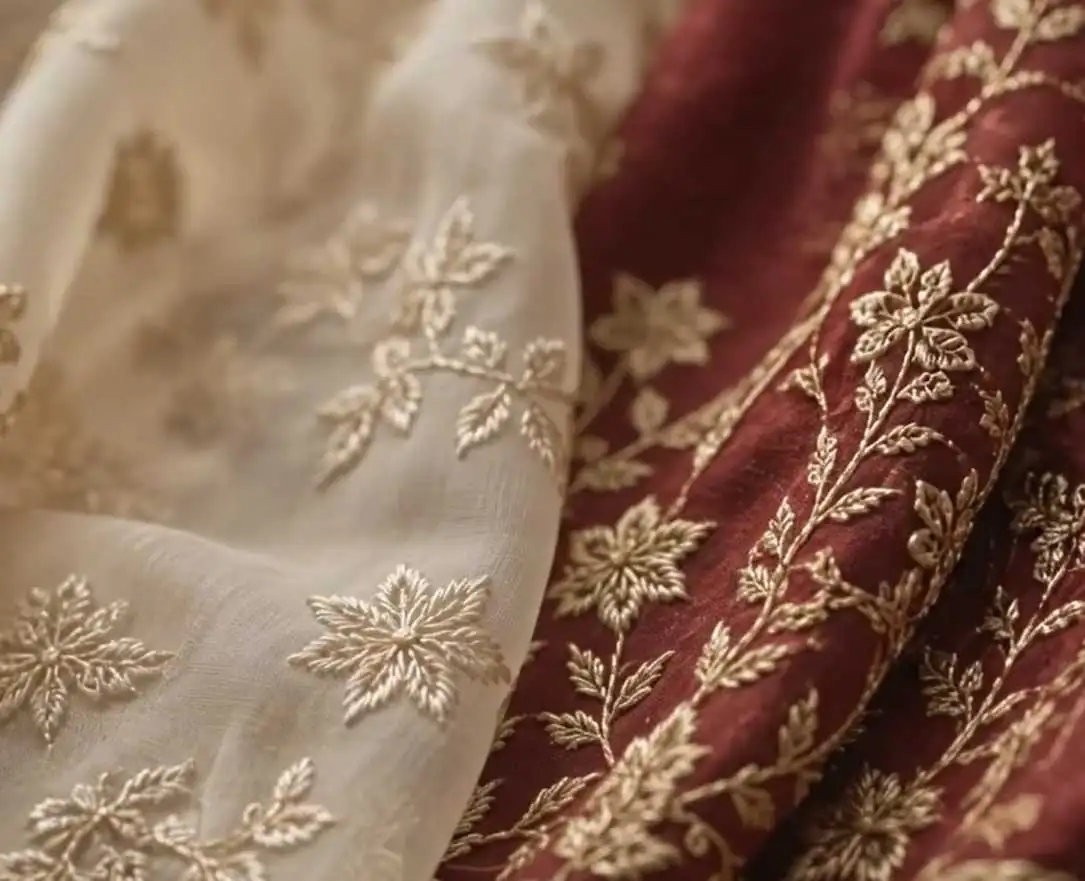
Chikankari is not a single embroidery style. It is a family of hand-embroidery techniques where each stitch creates a different effect — shadow, outline, texture, raised grain, seed detail or open lattice work. This is why two similar-looking Chikankari garments can have very different production effort, buyer value and wholesale pricing.

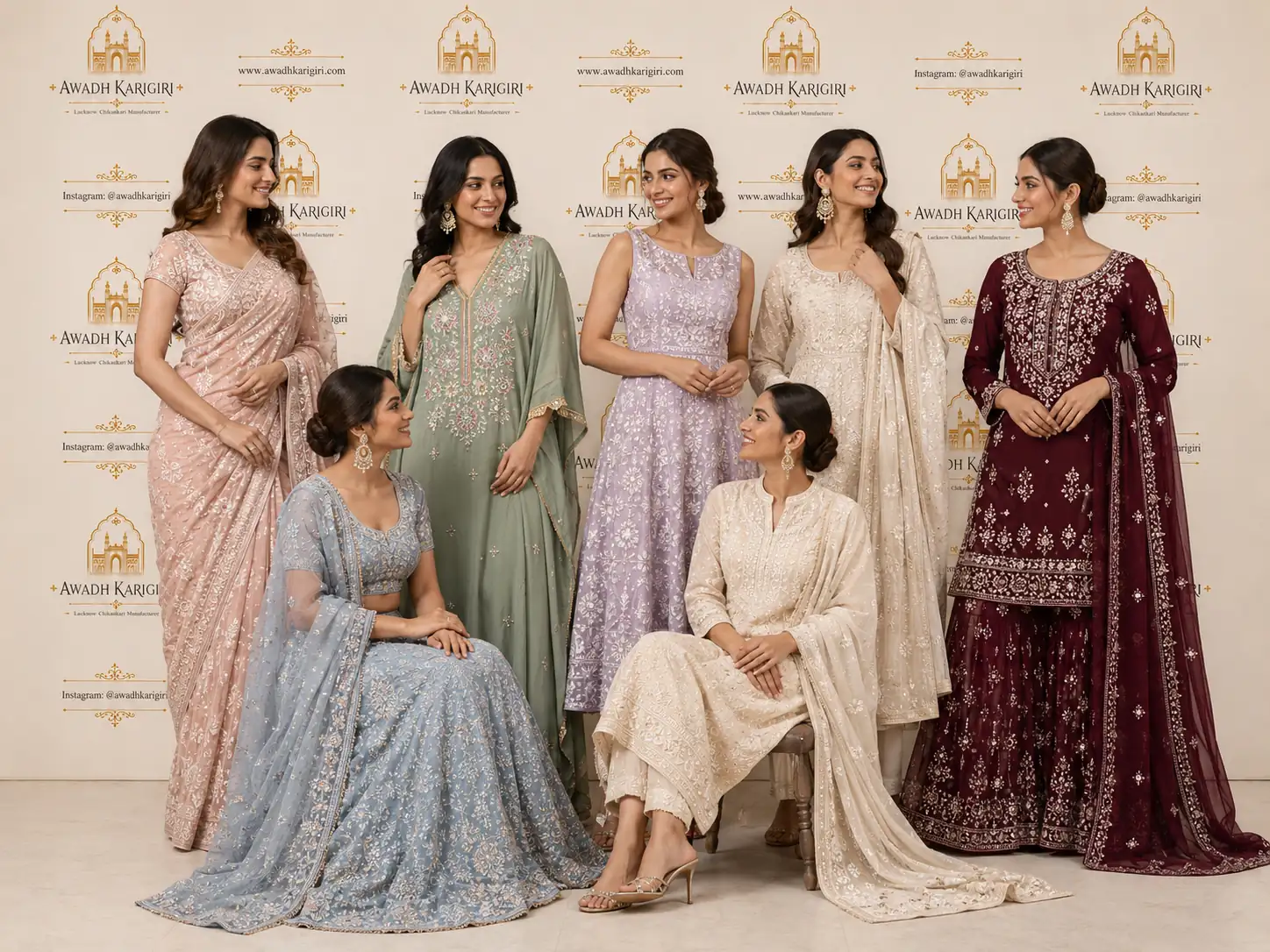
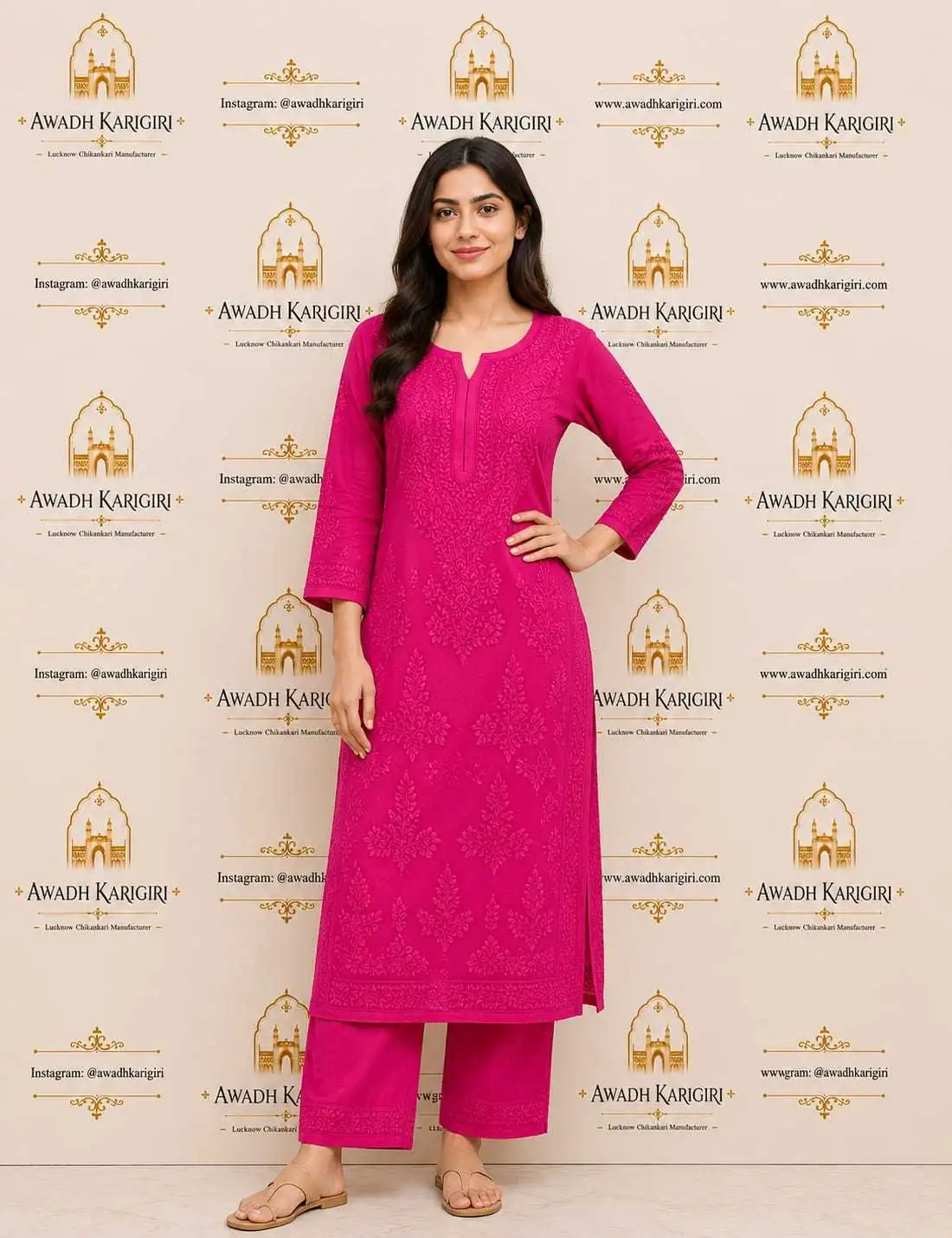
A single Lucknowi Chikankari garment often combines multiple stitches. Tepchi may define the outline, Bakhiya may create soft shadow work, Murri or Phanda may add raised texture, Keel Kangan may sharpen the motif edges, and Jaali may add premium open-work detail. For boutiques, exporters and private label buyers, understanding stitch types helps in selecting the right product category and price segment.

  • For daily wear: Tepchi, Bakhiya and light motif work are practical choices
  • For boutique wear: Bakhiya, Murri, Phanda and Keel Kangan add better visible detail
  • For premium pieces: Jaali, heavier Bakhiya, dense Murri and fine finishing increase value
  • For export buyers: Stitch selection affects lead time, finishing, pricing and repeat order planning
Quick Comparison

Chikankari stitch types at a glance.

01

Bakhiya

Shadow work used for soft floral filling, especially on kurtis, sarees, dupattas and suit sets.

02

Jaali

Open lattice-style work that gives a premium, delicate and lace-like handcrafted finish.

03

Murri & Phanda

Raised grain and seed-like knots used to add texture in flower centres, motifs and detailing.

04

Tepchi & Keel Kangan

Outline and structure stitches used to define motifs, stems, borders and clean embroidery lines.

Most Iconic

Bakhiya बखिया · Shadow Work

Bakhiya is one of the most recognised Chikankari stitches. It is commonly known as shadow work because the thread work creates a soft shaded effect on the fabric. This stitch is widely used in Chikankari kurtis, sarees, dupattas and suit sets where buyers want a refined, traditional Lucknowi look.

Bakhiya works beautifully on lightweight fabrics such as cotton, muslin, mulmul, georgette, chiffon and fine cotton blends. For wholesale buyers, Bakhiya is a strong choice because it balances authenticity, visual appeal and regular selling demand.

Visual Effect Soft shadow-like filling inside motifs
Best Used In Kurtis, sarees, dupattas, suit sets
Buyer Segment Daily wear, boutique wear, premium ethnic wear
Wholesale Note Ideal for repeatable catalogue styles and export-friendly products
Raised Texture

Murri मुर्री · Raised Grain Stitch

Murri is a raised stitch that looks like tiny rice grains on the fabric. It is used to add texture and depth inside flowers, buds and small motifs. Since Murri requires careful handwork, it often increases the visual richness of a Chikankari garment.

For boutiques and premium buyers, Murri is useful when the garment needs more visible handwork than plain outline embroidery. It is often combined with Bakhiya, Phanda, Tepchi or floral motifs to create detailed and textured Chikankari designs.

Visual Effect Raised rice-grain texture
Best Used In Kurtis, suit sets, sarees, dupattas
Buyer Segment Boutique, festive, premium and export buyers
Wholesale Note Good for buyers who want visible handcrafted texture
Delicate Detail

Phanda फंदा · Seeded Loop Stitch

Phanda is a tiny loop or knot-like stitch used to create seed-shaped details in Chikankari motifs. It is smaller and more delicate than Murri, making it useful for flower centres, small buds, dotted patterns and fine ornamental detail.

Phanda is often paired with Murri or Bakhiya to add depth without making the design too heavy. For wholesale buyers, Phanda work is a good option in sarees, dupattas and boutique kurtis where fine detail matters.

Visual Effect Tiny seed-like loops or dots
Best Used In Dupattas, sarees, kurtis, motif detailing
Buyer Segment Delicate boutique wear and premium handcrafted pieces
Wholesale Note Works well with Murri, Bakhiya and floral motifs
Premium Work

Jaali जाली · Open Lattice Work

Jaali is one of the most premium-looking Chikankari techniques. It creates an open lattice effect on the fabric, giving the garment a delicate lace-like appearance. Jaali work is often used in higher-value sarees, lehengas, dupattas and premium suit sets.

Because Jaali needs high skill and careful finishing, it is best planned for premium orders, bridal pieces, boutique displays and export buyers who want a clear handcrafted value proposition. It is not always suitable for very low-budget bulk products.

Visual Effect Open lattice, lace-like handcrafted finish
Best Used In Sarees, lehengas, dupattas, premium suit sets
Buyer Segment Bridal, premium boutique and export buyers
Wholesale Note Best for premium collections where detailing justifies higher value
Foundation Stitch

Tepchi टेपची · Running Stitch

Tepchi is a running stitch used for outlines, stems, borders and simple motif structure. It is one of the foundation stitches in Chikankari and is commonly used in daily wear and lightweight embroidery products.

For wholesale production, Tepchi is useful because it can create clean, repeatable patterns across kurtis, dupattas, suit sets and fabric panels. It can also be combined with Bakhiya, Murri or Keel Kangan to make the design richer.

Visual Effect Clean running lines and simple motif outlines
Best Used In Kurtis, dupattas, suit sets and daily wear garments
Buyer Segment Daily wear, low MOQ orders and repeat catalogue styles
Wholesale Note Good for budget-friendly and fast-moving Chikankari pieces
Motif Definition

Keel Kangan कील कंगन · Stem & Outline Work

Keel Kangan is used to define the structure of flowers, leaves and curved motifs. It gives the embroidery a sharper outline and helps the motif look more complete. This stitch is useful when the design needs crisp edges and stronger visual definition.

In wholesale Chikankari garments, Keel Kangan can improve the finish of kurtis, suit sets, dupattas and sarees. It is often used with Tepchi, Bakhiya or floral work to create a more balanced embroidered surface.

Visual Effect Crisp raised outline and structured motif edge
Best Used In Kurtis, suit sets, dupattas, sarees
Buyer Segment Boutique and premium ready-to-wear buyers
Wholesale Note Good for designs that need clean motif finishing
Fine Detailing

Hool हूल · Eyelet Detail

Hool is a small eyelet-style stitch used to create tiny openings or dot-like details inside a motif. It adds refinement to flowers and decorative patterns without making the garment too heavy. Hool is often appreciated by buyers who understand fine handwork.

This stitch is useful in premium kurtis, sarees, dupattas and suit sets where the design needs small handcrafted accents. For wholesale buyers, Hool can be discussed when the collection requires finer detailing and higher perceived value.

Visual Effect Small eyelet or dot-like detail
Best Used In Kurtis, sarees, dupattas and premium motifs
Buyer Segment Premium boutique and handcrafted fashion buyers
Wholesale Note Best for collections where fine detail is part of the selling point
Buyer Guide

Which Chikankari stitch should wholesale buyers choose?

01

For Daily Wear Kurtis

Choose Tepchi, light Bakhiya and simple motif work for comfortable, repeat-selling Chikankari kurtis and kurta sets.

02

For Boutique Collections

Use Bakhiya, Phanda, Murri and Keel Kangan to add handcrafted detail without making the garment too heavy.

03

For Premium Sarees & Lehengas

Plan Jaali, heavier Bakhiya, border work, pallu detailing and raised stitches for bridal and occasion-wear products.

04

For Export Orders

Select stitches based on target market, fabric, selling price, lead time, finishing requirement and repeat order feasibility.

Quality Check

How to identify good Chikankari stitch work.

Good Chikankari is not only about dense embroidery. The quality depends on stitch neatness, fabric handling, thread tension, clean motif placement, finishing and balance between embroidery and fabric. A design should look clean from a distance and refined when seen closely.

For wholesale buyers, the right stitch selection should match the product category. Daily wear kurtis do not always need heavy Jaali work, while premium sarees and lehengas may need richer detailing to justify their price. This balance helps boutiques and exporters build a stronger Chikankari collection.

  • Clean outline: Motifs should not look broken, loose or uneven
  • Balanced embroidery: Stitch density should match the fabric and product category
  • Neat reverse side: Handwork should not feel overly messy or uncomfortable
  • Fabric compatibility: Heavy stitches should be used carefully on delicate fabrics
  • Repeat order planning: Approved stitch style should be documented for future production
Chikankari Stitch FAQ

Common questions about Chikankari stitch types.

What are the main Chikankari stitch types?

Important Chikankari stitch types include Bakhiya, Jaali, Murri, Phanda, Tepchi, Keel Kangan and Hool. Different garments may use one stitch or a combination of multiple stitches.

Which Chikankari stitch is best for daily wear kurtis?

Tepchi, light Bakhiya and simple motif work are practical for daily wear kurtis because they offer a clean handcrafted look without making the garment too heavy.

Which stitch gives the shadow work effect in Chikankari?

Bakhiya is commonly associated with the soft shadow work effect in Lucknowi Chikankari. It is widely used in kurtis, sarees, dupattas and suit sets.

Which Chikankari stitch is used for premium pieces?

Jaali, heavier Bakhiya, fine Murri, Phanda and well-finished Keel Kangan work are often used in premium Chikankari pieces such as sarees, lehengas, dupattas and boutique collections.

Can I request a specific stitch in a wholesale Chikankari order?

Yes. Buyers can discuss stitch preferences such as Bakhiya, Jaali, Murri, Phanda, Tepchi or Keel Kangan depending on fabric, design complexity, MOQ, budget and production feasibility.

Does stitch type affect Chikankari pricing?

Yes. Stitch type, embroidery density, fabric, design complexity, finishing and production time can affect the final wholesale price of Chikankari garments.

How can I choose the right stitch for my boutique collection?

Share your product category, target customer, budget range and market. We can help suggest suitable stitch combinations for kurtis, sarees, dupattas, suit sets, lehengas or sharara sets.

Want Chikankari products with a specific stitch?

Tell us which stitch you need — Bakhiya, Jaali, Murri, Phanda, Tepchi, Keel Kangan or Hool — along with product category, quantity, fabric and target market. We will guide you with suitable catalogue and wholesale options.